 العربية
 English

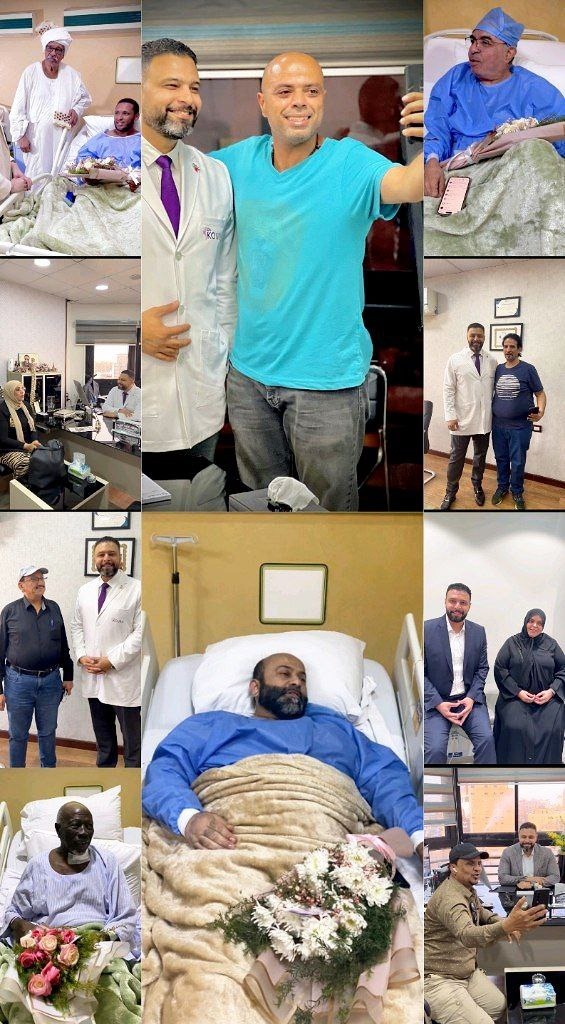
To see patients' reviews
Click hereCluster Headache: Radiofrequency Ablation Treatment

Symptoms
- Neck Pain
- Headache
Cluster Headache (CH) and Advanced Headache Treatment Options
Cluster Headache (CH) is a rare but highly disabling primary Headache Disorder which people describe as the most intense Headache Pain they experience. The condition causes patients to suffer from continuous one-sided episodes producing extreme pain in the eye area or temples together with autonomic symptoms. A portion of patients does not respond to standard medical treatments despite the effectiveness of drug therapy. The use of interventional pain management techniques, including Radiofrequency Ablation Headache Treatment (RFA), has proven to be an effective option for Refractory Cluster Headache Treatment. This article presents an extensive examination of Cluster Headache Pathophysiology, clinical symptoms, and treatment methods including Radiofrequency Treatment for Headache.
Cluster Headache is a Trigeminal Autonomic Cephalalgia (TAC) which predominantly affects males between their third and fifth decades of life. CH produces an extreme impact on patients' daily functioning because its symptoms appear in cycles and cause intense pain which occurs less frequently than Migraine Headache. Patients with chronic or intractable conditions require specialized Headache Treatment because standard abortive and preventive medications do not work.
Pathophysiology
The pathophysiology behind Cluster Headache is a complex interplay between the trigeminal vascular system, parasympathetic activation via the Sphenopalatine Ganglion (SPG), and hypothalamic dysfunction.
- The posterior hypothalamus shows continuous activation through neuroimaging studies during attacks
- The trigeminal autonomic reflex arc connects the trigeminal nerve to facial parasympathetic outflow
- SPG and trigeminal nerve activation results in autonomic symptoms including lacrimation, nasal congestion, and ptosis
Clinical Features
Patients experience Cluster Headache Pain as:
- Severe unilateral head pain affecting the eye and temporal region lasting 15–180 minutes
- Autonomic symptoms such as eye redness, tearing, nasal congestion, facial drooping, and pupil changes
- Cyclical attack patterns occurring daily and seasonally
- Episodic and chronic forms of Cluster Headache
- Episodic CH (80–90%): remission periods ≥3 months
- Chronic CH: no remission periods
Conventional Treatment Options
- Acute Abortive Therapy
- High-flow oxygen: first-line therapy, effective in up to 70%
- Subcutaneous sumatriptan: most effective abortive medication
- Intranasal zolmitriptan: alternative option
Preventive Therapy
- Verapamil: first-line prophylactic drug requiring ECG monitoring
- Lithium, topiramate, melatonin: used in refractory cases
Refractory Cluster Headache and the Role of Interventional Management
Approximately 10–15% of patients with Cluster Headache are refractory to pharmacological treatment, especially chronic forms. Advanced Non-Surgical Headache Treatment options include neuromodulation and ablative procedures targeting key neural structures.
Radiofrequency Ablation (RFA) in Cluster Headache
Radiofrequency Ablation Headache Treatment (RFA) uses controlled heat (60–80°C) to interrupt neural conduction and reduce pain transmission in chronic Cluster Headache Treatment cases.
Mechanism of Action
- Disrupts nociceptive signaling pathways
- Modulates autonomic outflow in pain-related ganglia
- Reduces trigeminal nerve hyperactivity responsible for Cluster Headache Pain
Target Sites for RFA in Cluster Headache
1. Sphenopalatine Ganglion (SPG)
• The SPG is a key parasympathetic ganglion involved in the pathophysiology of CH.
• RFA of the SPG has been shown to significantly reduce attack frequency and intensity.
• Studies report long-lasting relief (up to 6–12 months or more) in patients with refractory CH.
2. Trigeminal Nerve (V2 division)
• In some patients, RFA of the maxillary branch of the trigeminal nerve has been used, particularly in cases with prominent facial pain components.
3. Occipital Nerve (C2/C3 dorsal roots)
• Though more commonly targeted in migraine and occipital neuralgia, RFA of the greater occipital nerve or its roots can benefit CH patients with overlapping symptoms.
4. Types of Radiofrequency Techniques
• Conventional (thermal) RFA: Produces neurodestructive lesions.
• Pulsed RFA: Uses lower temperatures (42°C) to modulate nerve activity without destruction—especially beneficial for reducing complications.
5. Clinical Evidence
• Cohen et al., 2010: Demonstrated significant reduction in CH frequency following SPG RFA.
• Narouze et al.: Found pulsed RFA to be safer with a favorable side effect profile while still offering meaningful pain relief.
• Recent studies (2020–2023) suggest RFA offers 50–80% sustained relief in refractory CH when applied to the SPG or trigeminal V2.
Advantages of Radiofrequency in Cluster Headache
- The procedure requires only minimal surgical intervention which results in a limited number of complications.
- The medical procedure requires patients to stay outside the hospital while doctors use either fluoroscopy or CT imaging to conduct the procedure.
- The treatment provides permanent pain relief which decreases the patient's requirement for multiple medications.
- The process allows for reversal and re-execution with particular effectiveness through the use of pulsed radiofrequency ablation.
Limitations and Risks
- Facial numbness and dysesthesia and hypoesthesia create higher frequency of occurrence with standard RFA treatment.
- The procedure needs skilled interventional specialists who can operate under exact imaging specifications to achieve successful results.
- CH treatment does not provide a permanent solution because patients can experience relapse which requires them to undergo additional procedures.
Future Directions
Emerging technologies such as stereotactic RFA, ultrasound-guided procedures, and robot-assisted navigation systems are improving precision and safety in Headache Treatment. Combining neuromodulation (SPG stimulation) with CGRP-targeted therapies shows promising outcomes.
Cluster Headache remains one of the most disabling primary headache disorders, especially in chronic and refractory cases. While medication remains first-line, Radiofrequency Ablation Headache Treatment targeting the Sphenopalatine Ganglion (SPG) provides a safe and effective Non-Surgical Headache Treatment option.
With continued clinical advancement, Radiofrequency Treatment for Headache is becoming a cornerstone in modern pain management, particularly under specialists such as Dr. Koura, who offers advanced minimally invasive headache solutions.
Dr. Mohamed koura is here to assist you using the latest therapeutic techniques, including thermal radiofrequency and laser treatments for spinal pain without surgery—book your appointment now from here.
Why Choose Dr. Mohamed Koura ?
Simply because he is the best doctor in his feild. He stays updated on the latest treatment technologies through his participation in various international conferences with leading foreign doctors and experts. Finally, and most importantly, Dr. Mohamed Koura is the best doctor in Egypt and the Arab world, possessing 12 non-surgical techniques for treating spinal and joint problems. He was the first to introduce modern interventional treatment techniques in Egypt & the Middle East and is the only one using the disc fx technique to treat spinal pain.
The pain can be caused by tension headaches, migraines, sinusitis, or muscle tension in the neck and jaw. Affected nerves, such as the trigeminal nerve, can also play a significant role, along with lifestyle factors like stress, lack of sleep, and poor posture.
Certainly not, some cases must be treated surgically, and the most suitable technique for treating the patient is determined through medical examination in addition to the presence of X-ray images.
Yes, Dr. Mohammed Koura's center relies on non-surgical techniques to relieve pain and improve mobility. These include therapeutic injections for affected nerves and muscles, radiofrequency ablation to reduce pressure on nerves, and physical therapy exercises to stretch and strengthen muscles around the head and neck.
Interventional injections, or therapeutic injections, are a technique in which the doctor injects anti-inflammatory or pain-relieving medication directly into the source of pain, such as irritated nerves or muscle spasms. This helps reduce pain quickly without the need for surgery.
Yes, muscle tension in the neck and jaw can cause pain in the face or head, and it is often associated with stress or poor posture. Treatment usually includes muscle strengthening exercises and relaxation techniques.
Radiofrequency ablation helps reduce pressure on affected nerves, providing fast and effective pain relief. It is often combined with therapeutic injections to achieve better and longer-lasting results.
Migraine is usually throbbing and concentrated on one side of the head, and it may be accompanied by nausea and sensitivity to light. Tension headache, on the other hand, is more constant and causes pressure around the head and neck, often worsening with stress.
In some cases, symptoms may return if strengthening exercises are not continued or stress triggers are not avoided. However, by following the personalized treatment plan provided by Dr. Koura, the chances of pain recurrence can be significantly reduced.
A life without pain without surgery
Once you book with Dr. Koura
Get rid of pain with just one call… Book your appointment now with Dr. Mohamed Koura, the best pain management doctor and a specialized consultant in spine treatment.
The highest success rates thanks to years of experience and scientific development
Using the latest non-surgical technologies available in Egypt and the Middle East
The largest team specialized in treating spine and joint pain without surgery
































Services
Our Branches
- Egypt - El Mohandssen
- +201210577770
- 54, intersection of Al-Batal Ahmed Abdel Aziz Street with the League of Arab States, above Qatar National Bank - Mohandiseen - Giza
- Al Sheikh Zayed
- 00201067303035
- ، First Al Sheikh Zayed, Giza Governorate
- Dubai
- +971501232065
- Dubai Healthcare City Phase 2 - Al Jaddaf - Dubai - United Arab Emirates