 العربية
 English

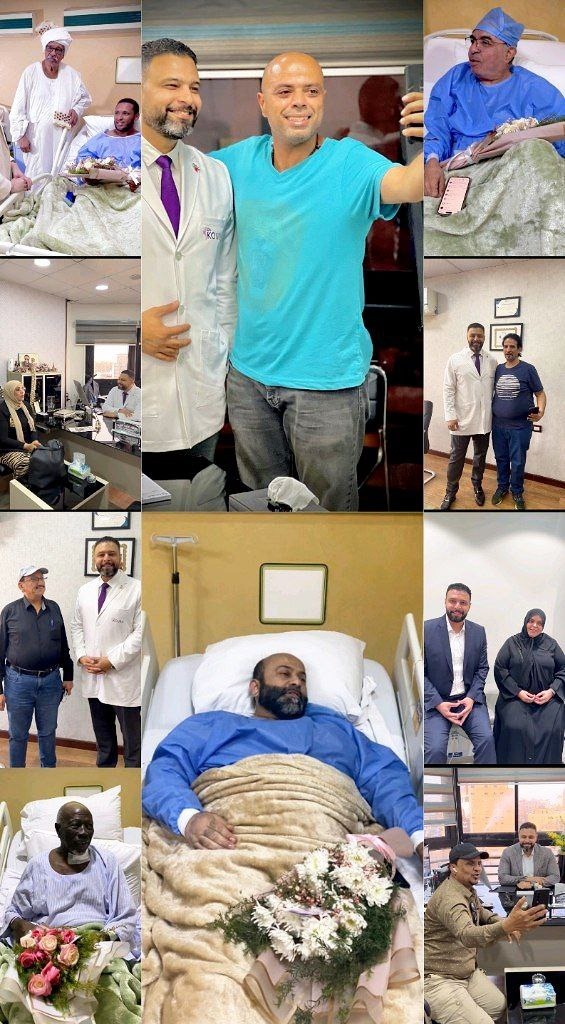
To see patients' reviews
Click hereDisc-FX for Slipped Disc: Minimally Invasive Spine Treatment in Dubai and Cairo
-webp.webp)
Symptoms
Disc-FX for Slipped Disc: Minimally Invasive Spine Treatment in Dubai and Cairo
If a slipped disc(As known medically as a "herniated or bulging" disc) is still sending pain down your leg after months of tablets and physiotherapy, your options are wider than waiting or booking spinal surgery. Dr. Mohamed Koura, Consultant in Pain Medicine in Egypt and Specialist in Pain Medicine in Dubai, assesses patients for image-guided, minimally invasive procedures, including Disc-FX, a technique for carefully selected lumbar disc problems, at his clinics in Cairo and Dubai.
The goal of an assessment is not to sell you a procedure. It is to find out exactly where your pain comes from, match it to the least invasive treatment that makes sense, and tell you plainly when another route, or no procedure at all, is the better choice. Patients travel from across the Gulf, North Africa and the wider region for this kind of individual assessment.
What is Disc-FX?
Disc-FX is a minimally invasive, percutaneous intradiscal procedure designed to treat selected cases of contained intervertebral disc herniation and discogenic pain. The technique combines mechanical removal of targeted disc tissue with bipolar radiofrequency treatment to achieve intradiscal decompression while minimizing disruption to surrounding anatomical structures.
Mechanism of Action
1. Manual Decompression
Using specialized miniature grasping forceps, Dr.Koura selectively removes portions of the nucleus pulposus contributing to disc herniation and neural compression.
This mechanical decompression aims to reduce the volume of the targeted disc material and alleviate pressure on adjacent neural structures in appropriately selected patients.
2. Nucleuoplasty
The bipolar radiofrequency system delivers controlled energy to targeted intradiscal tissue, producing localized thermal effects and facilitating tissue ablation.
This process aims to reduce the volume of the treated nucleus pulposus and may contribute to a reduction in intradiscal pressure, depending on the morphology of the herniation and the characteristics of the treated disc.
3. Annular Modulation (Annuloplasty)
Radiofrequency energy is applied to selected regions of the annulus fibrosus, the outer fibrocartilaginous layer surrounding the nucleus pulposus.
The objective is to induce localized thermal modification of the annular tissue and modulate sensory nerve fibers associated with discogenic pain. This may help alleviate symptoms originating from selected forms of annular injury.
clarifications patients often need:
- Disc-FX is It is not a laser procedure; laser disc decompression is a separate option.
- It is not open surgery and is usually performed under local anaesthesia or light sedation
Who may be suitable for Disc-FX, and who may not
Disc-FX is generally considered for symptoms that come from a contained disc problem in the lower back, such as:
- a painful contained herniation or protrusion
- a small disc bulge or annular tear
- discogenic back pain (pain arising from inside the disc itself)
- sciatica caused by mechanical pressure from the disc on a nerve root
This is usually after medication, physiotherapy and activity changes have not given enough relief. It is less likely to be appropriate if you have a large extruded or sequestered fragment, marked spinal instability, severe canal narrowing, advanced disc collapse, active infection or progressive weakness. Suitability is decided after clinical examination and radiological scans
Seek urgent medical care if you develop loss of bladder or bowel control, numbness around the saddle area, or rapidly worsening leg weakness. These need emergency assessment.
What to expect: procedure and recovery
- Assessment first. History, examination and MRI review, sometimes with further tests to confirm the source of pain.
- The procedure. Usually a day-case under local anaesthesia, guided by fluoroscopy, through a small skin incision.
- Recovery. Many patients go home the same day and return to light daily activity within days. You will receive personalised advice on lifting, sitting and exercise. Recovery varies, and some patients need longer.
- Afterwards. Doctors' post-procedural instructions ,Weight management, core strengthening and posture advice matter because they reduce the chance of the problem returning.
What the research says, and what it cannot promise
A 2023 scoping review in Medicina (Lin et al.) pooled the published studies and concluded that the technique provided considerable pain relief and functional improvement with a low complication rate. Across 570 patients, transient post-procedure pain was reported in about 9% and recurrence in about 1.6%. These are group results from selected patients at other centres, not a prediction or guarantee for you.
Disc-FX is one option in a wider toolkit
Disc-FX is one of around 12 interventional techniques offered across Dr. Koura’s practice. That breadth matters because two patients with ‘a slipped disc’ can have very different problems: an inflamed nerve root, pain from inside the disc, scar tissue, a narrowed canal, or joint pain that mimics disc pain. Techniques described on his website include:
- image-guided nerve root and epidural injections
- radiofrequency treatment of nerves and joints
- laser disc decompression (percutaneous laser nucleoplasty)
- Disc-FX
- epiduroscopy (camera-guided epidural procedure)
- navigable catheter treatment for spinal canal narrowing
- MILD minimally invasive lumbar decompression
- the Claudicare technique for widening the nerve canal
- botox injections for selected pain conditions
- endoscopic disc procedures
Some of these are technically demanding, with a steep learning curve and specialist training, and are not offered by every pain clinic. That is why selection and experience matter more than the name of the technology.
Epiduroscopy and catheter procedures: different tools for different problems
These are separate procedures chosen for different reasons. They are not one combined treatment.
Epiduroscopy passes a very fine scope through a catheter, via a small needle entry, into the epidural space. The doctor can see scar tissue and adhesions around nerve roots on screen, free them, and deliver treatment precisely. It is used mainly for pain that persists after back surgery, adhesions, and selected cases of small recurrent disc herniation. According to Dr. Koura’s website, it takes about 40 minutes under local anaesthesia with sedation, with discharge after around an hour and about 24 hours of rest. It demands considerable skill and is performed by relatively few specialists.
Navigable catheter treatment uses a steerable catheter placed through a needle and guided under X-ray to a specific narrowed level, for example where a nerve root leaves a tight canal, to deliver treatment there and free adhesions. It is often considered for early and mild cases of lumbar canal stenosis.
[OPTIONAL – confirm before publishing: ‘Where appropriate, balloon-assisted and laser-assisted epidural techniques may also be used. These are distinct from epiduroscopy and catheter adhesiolysis and are chosen only for specific findings.’ Delete if not offered.]
Neck pain and cervical disc problems
Neck and arm pain from a cervical disc or pinched nerve needs particular care. The cervical spine sits close to the spinal cord and major blood vessels, so the margin for error is smaller than in the lower back. Careful patient selection, precise imaging guidance and specialist experience are essential.
While the standard, larger Disc-FX system is reserved for lumbar and thoracic herniations, the Disc-FX Mini scales down the instrumentation to allow spine specialists to safely access contained cervical disc herniations via a much smaller entry portal.
|
Feature / Dimension |
Standard Disc-FX |
Disc-FX Mini |
|
Primary Target Anatomy |
Lumbar (lower back) and Thoracic (mid-back) spine |
Cervical (neck) spine |
|
Working Portal Size |
Approximately 3.0 mm needle entry |
Significantly smaller / scaled-down portal diameter |
|
Approach Trajectory |
Posterolateral (safely enters through the side/back of the lower back) |
Anterior / Anterolateral (safely enters through the front/side of the neck) |
|
Instrumentation Profile |
Larger, rigid forceps and a wider bipolar probe |
Ultra-thin, ultra-precise micro-forceps and miniaturized thermal probes |
|
Tissue Volume Profile |
Designed to debulk a larger volume of lumbar disc material |
Designed for hyper-precise micro-decompression in tight margins |
Pain that persists after spine surgery
Persistent pain after back surgery, known as failed back surgery syndrome and now often called persistent spinal pain syndrome, has several possible causes: scar tissue around nerve roots, a recurrent herniation, a narrowed canal, an irritated facet or sacroiliac joint, or nerve sensitisation. Treating the wrong cause is why many patients keep hurting.
For selected patients, options may include epiduroscopy with adhesiolysis, navigable catheter treatment, targeted nerve root and epidural injections, and radiofrequency procedures. The first step is working out which source is responsible. Not every case is suitable, and some patients need a surgeon’s opinion. You will be told which.
Knee, shoulder and hip joint pain
Knee osteoarthritis and shoulder or hip joint pain are among the most common reasons people seek interventional care. Dr. Koura’s practice reports more than 3,600 knee interventions. Depending on the joint and your imaging, options may include image-guided joint and nerve injections and radiofrequency treatment of the small nerves that carry pain signals from the joint. These aim to reduce pain and improve movement. They do not regrow cartilage, and advanced joint damage may still need a surgical opinion.
Beyond the spine: hyperhidrosis, trigeminal neuralgia and cluster headache
Hyperhidrosis (excessive sweating of the hands or feet). Radiofrequency treatment targets the sympathetic nerves that drive sweating, using a needle under image guidance, without the chest incisions and general anaesthetic of endoscopic thoracic sympathectomy (ETS). ETS is a surgical procedure that interrupts the sympathetic chain through the chest and can cause compensatory sweating elsewhere in some patients. Radiofrequency is less invasive, highly advantageous for patient safety. Because surgical sympathectomy carries a significant risk of irreversible adverse effects like severe compensatory hyperhidrosis, Radiofrequency (RF) Sympatholysis serves as an excellent, low-risk intermediary intervention.
Although nerve regeneration can cause the therapeutic effects of RF to gradually diminish over a long-time period , the temporary nature of the block is clinically valuable. It acts as a reversible, functional medical teqnique that allows both the clinician and the patient to evaluate the therapeutic efficacy and monitor for any secondary compensatory sweating before considering permanent structural changes.
The right choice depends on severity, areas affected and your priorities.
Trigeminal neuralgia. Sudden electric-shock facial pain is usually treated first with medication. For selected patients with inadequate relief or side effects, radiofrequency treatment of the trigeminal nerve pathway may be considered after MRI and neurological assessment. Neurosurgical options are a separate pathway and will be discussed where relevant.
Cluster headache. Severe one-sided attacks around the eye need careful neurological assessment. For selected patients whose headaches are not controlled by standard treatment, interventional options including radiofrequency may be considered.
Why patients choose Dr. Mohamed Koura
- Consultant in Pain Medicine in Egypt and Specialist in Pain Medicine in Dubai, with more than 15 years in interventional pain medicine
- Fellow of Interventional Pain Practice (FIPP, World Institute of Pain, 2019) and European Diploma in Pain Medicine (EDPM, EFIC, 2019)
- MSc in Anaesthesia, Intensive Care and Pain (Menoufia University) and MBBCh
- A practice that reports more than 8,500 spinal and 3,600 knee interventions, with patients from more than 50 countries
- Around 12 techniques, so treatment can be matched to your diagnosis rather than your diagnosis being fitted to one technique
- Clinics in Cairo and Dubai
Travelling for treatment: Cairo and Dubai
Dr. Koura practices at two Cairo locations (Mohandessin and Sheikh Zayed) and in Dubai Healthcare City (Phase 2, Al Jaddaf). Patients from Libya, Saudi Arabia, Kuwait, Bahrain, Qatar, Iran and elsewhere travel to Cairo or Dubai for assessment and, where appropriate, treatment. Choose whichever clinic is more practical for you.
- Send your MRI and reports when you enquire so the team can advise whether travel is worthwhile.
- Ask about the expected length of stay and follow-up before you book flights.
- In Dubai, ask about insurance. The clinic lists partnerships with a number of insurers, but cover for procedures depends on your plan.
- Appointments must be booked in advance; walk-ins are not accepted.
Frequently asked questions
Is Disc-FX surgery? It is a minimally invasive, percutaneous procedure rather than open surgery, but it is very reassuring to note that the overall risk of complications with Disc-FX is notably lower than with traditional open spine surgery if the surgery is not indicated in the first place, Because the procedure relies on a tiny, precise puncture rather than cutting into muscle or bone, the recovery process is generally much gentler on the body.
Can Disc-FX treat a neck disc? Yes, Disc-FX can treat a neck (cervical) disc, but it requires the specialized Disc-FX Mini system rather than the standard lumbar version.
How is Disc-FX different from epiduroscopy? Disc-FX works inside the disc. Epiduroscopy works in the epidural space, looking at and freeing scar tissue around nerves.
Do I need an MRI? Usually yes. Bring any recent MRI and reports, or send them when you enquire.
How soon can I return to normal activity? Many patients resume light daily activity within days, but this varies and you will get individual advice.
Will I definitely qualify? No. Suitability is decided after madical assessment, and some patients are better served by another option or a surgeon.
I live in Saudi Arabia, Kuwait, Bahrain, Qatar, Libya or Iran. Can I be assessed? Yes. You can enquire by WhatsApp with your MRI and attend the Dubai or Cairo clinic.
How much does it cost? Cost depends on the procedure and clinic. Contact the clinic for a quote.
Why Choose Dr. Mohamed Koura ?
Simply because he is the best doctor. He stays updated on the latest treatment technologies through his participation in various international conferences with leading foreign doctors and experts. Finally, and most importantly, Dr. Mohamed Koura is the best doctor in Egypt and the Arab world, possessing 12 non-surgical techniques for treating spinal and joint problems. He was the first to introduce modern interventional treatment techniques in Egypt and the Middle East and is the only one using the disc fx technique to treat spinal pain.
Watch Dr. Koura through videos
By following Dr. Koura on social media, you can watch videos to learn more about pain management techniques
Dr. Mohamed Koura’s clinic provides advanced interventional pain management treatments without surgery, including radiofrequency ablation, Disc-FX endoscopic discectomy, catheter-based treatments, nerve root injections, and treatments for herniated discs, joint pain, and spinal conditions.
Yes, in many cases a herniated disc can be treated without surgery using minimally invasive techniques such as Disc-FX endoscopy, radiofrequency therapy, or image-guided injections. The appropriate treatment is determined after proper medical evaluation.
Radiofrequency is a modern pain management technique that uses heat energy to interrupt pain signals coming from the affected nerves, helping to significantly reduce chronic pain without the need for surgery.
Disc-FX is a minimally invasive endoscopic technique used to treat herniated discs without open surgery. It precisely removes the damaged disc tissue causing pain, resulting in faster recovery and fewer complications.
Recovery time is usually much shorter compared to traditional surgery. Most patients can return to their normal daily activities within a short period, depending on the procedure performed.
Yes, nerve root injections are highly effective in reducing pain caused by herniated discs or nerve inflammation. They provide fast and targeted pain relief.
Results vary depending on the patient’s condition and disease severity. In many cases, non-surgical treatments provide long-term relief when combined with proper medical follow-up and lifestyle adjustments.
A life without pain without surgery
Once you book with Dr. Koura
Get rid of pain with just one call… Book your appointment now with Dr. Mohamed Koura, the best pain management doctor and a specialized consultant in spine treatment.
The highest success rates thanks to years of experience and scientific development
Using the latest non-surgical technologies available in Egypt and the Middle East
The largest team specialized in treating spine and joint pain without surgery

































Services
Our Branches
- Egypt - El Mohandssen
- +201210577770
- 54, intersection of Al-Batal Ahmed Abdel Aziz Street with the League of Arab States, above Qatar National Bank - Mohandiseen - Giza
- Al Sheikh Zayed
- 00201067303035
- ، First Al Sheikh Zayed, Giza Governorate
- Dubai
- +971501232065
- Dubai Healthcare City Phase 2 - Al Jaddaf - Dubai - United Arab Emirates