
 العربية
 English

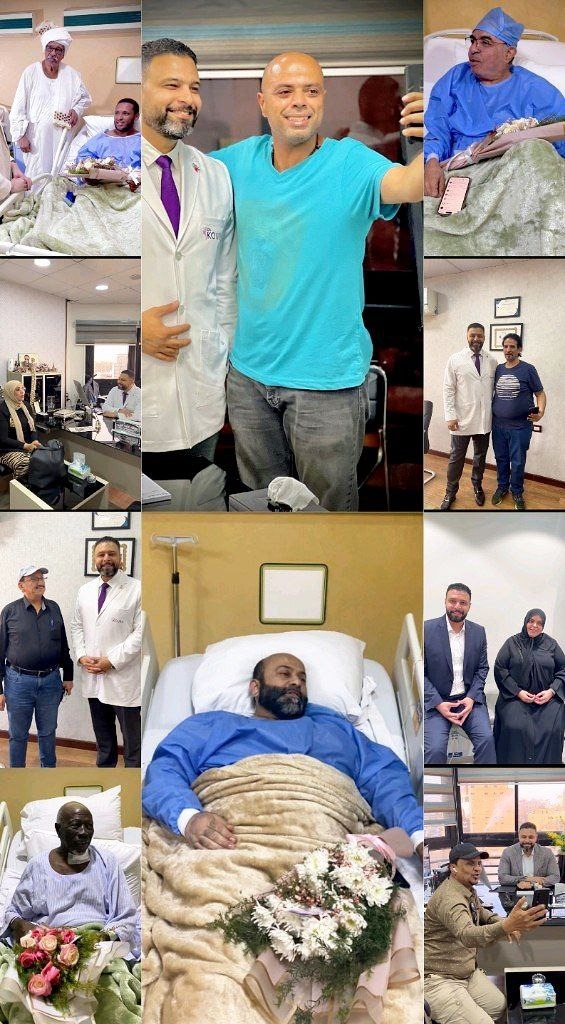
To see patients' reviews
Click hereEpiduroscopy in Dubai & Cairo | Dr Mohamed Koura
Symptoms
Epiduroscopy in Dubai and Cairo: Advanced Treatment fior Persistent Back and Leg Pain
If you have had spine surgery and the pain came back, or never left, the next step is rarely more of the same. Epiduroscopy lets a specialist look directly at the adhesions and inflamed space around your nerves and treat what is actually there. It is technically demanding, it is not available in every pain clinic, and it suits well-selected patients.
Dr Mohamed Koura is a Consultant in Pain Medicine in Egypt and a Specialist in Pain Medicine in Dubai. He assesses patients at his clinics in Cairo and Dubai, including people who travel specifically for an expert opinion and an interventional procedure. This guide explains what epiduroscopy is, who may benefit, how it differs from similar-sounding procedures, and what to prepare if you are travelling.
What is epiduroscopy?
The epidural space is the area inside the spinal canal that surrounds the nerve roots. After surgery, infection, or long-standing disc and nerve irritation, scar tissue (adhesions) can form there and tether or inflame a nerve. Radiological scans shows some of this, but not always clearly.
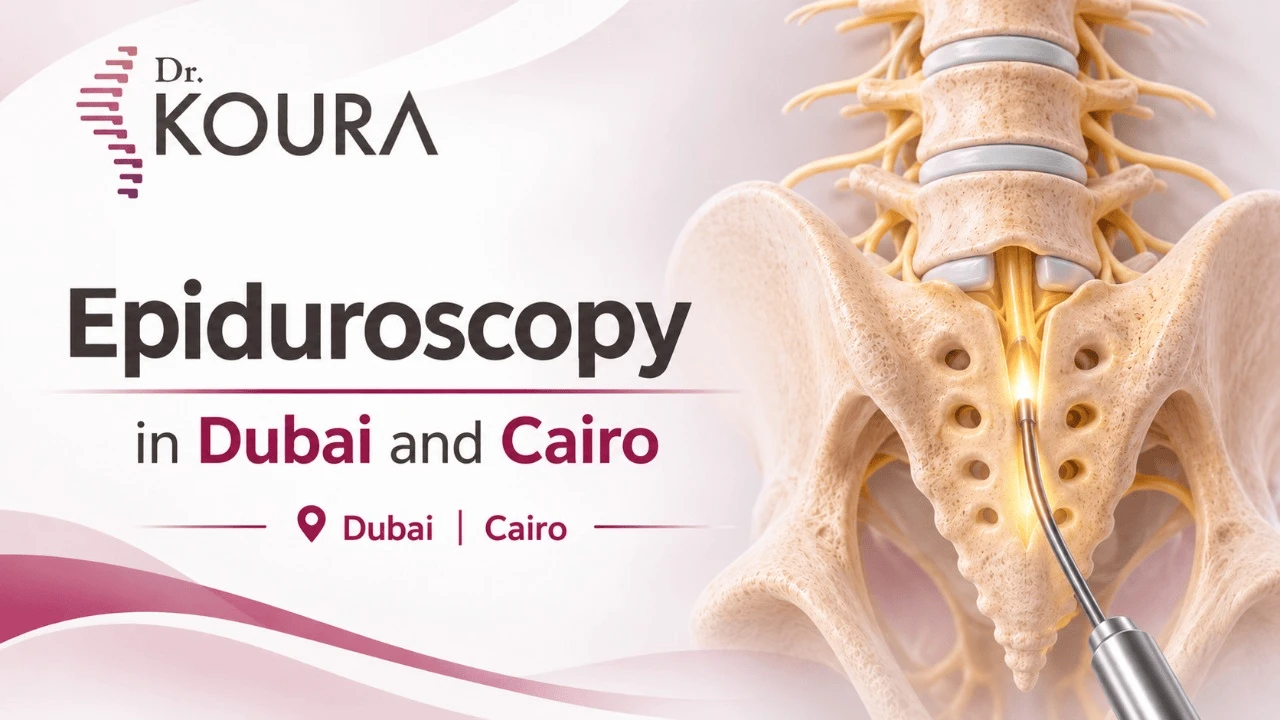
In epiduroscopy, a very thin fibreoptic scope is passed into the epidural space through a small needle entry at the base of the spine, under X-ray guidance, usually with local anaesthetic and light sedation. The doctor sees the nerve and surrounding tissue on a screen, can free adhesions in suitable cases, and can place medication exactly where it is needed. A typical procedure lasts around 30-40 minutes, though timing varies with the case.
Epiduroscopy is not the same as other epidural procedures
Several procedures work in or near the same space. They are different tools, and a patient may need one, a different one, or none. They are not one combined package.
|
Procedure |
Where it works |
What it does |
When it may be considered |
|
Epiduroscopy |
Epidural space |
Camera view of the nerve and scar; frees adhesions; targeted medication |
Persistent leg or back pain, often after surgery, with suspected epidural scarring |
|
navigation catheter adhesiolysis |
Epidural space, X-ray guided |
Catheter delivers medication and helps loosen adhesions without a camera |
Selected narrowing or adhesions when direct vision is not needed |
|
Balloon catheter |
Epidural space |
Small balloon on a catheter widens a scarred or narrowed area |
Selected cases of scarring around nerve roots |
|
Disc-FX |
Inside the disc |
Removes a limited amount of disc material and applies radiofrequency energy |
Contained disc herniation or disc-origin pain; lumbar, and selected cervical cases |
|
Endoscopic discectomy |
Disc and nerve root |
Removes the fragment pressing on the nerve |
Larger herniations pressing clearly on a nerve |
Epiduroscopy and failed back surgery syndrome
Persistent pain after spine surgery is called failed back surgery syndrome, or persistent spinal pain syndrome. The causes differ: scar tissue, a recurrent small disc herniation, narrowing around a nerve, joint pain, or a mix. Treating the wrong source is why some
patients cycle through repeat scans and repeat operations.
Epiduroscopy is one option for selected patients in this group, especially when adhesios in the epidural space is the likely cause. It sits within a wider range of options that can include targeted injections, radiofrequency treatment, catheter procedures, and, when the problem is mechanical, further surgery done with a neurosurgeon.
Who may be suitable, and who may not
You may be a candidate if you have leg or back pain that persists after surgery or conservative treatment, and your clincal examination ,medical history and radio-logical scans combined suggest adhesions or nerve irritation in the epidural space.
Epiduroscopy is generally not appropriate if you have an active infection, a bleeding problem or blood thinners that cannot be paused safely, or progressive weakness, foot drop, or loss of bladder or bowel control. Those signs need urgent specialist assessment.
Why technique and experience matter
Epiduroscopy has a demanding learning curve. Training literature on the procedure stresses that it should not be attempted by a novice working alone. It requires comfort with spinal anatomy, X-ray interpretation, and judgement about when to stop.
Dr Koura holds the Fellowship in Interventional Pain Practice (FIPP, 2019) and the European Diploma in Pain Medicine (EDPM, 2019), and completed advanced training in endoscopic spine techniques in Salzburg and Munich. He has more than 15 years of experience in interventional pain medicine and has treated patients from more than 50
countries. His practice includes around a dozen interventional techniques, which allows treatment to be matched to the diagnosis rather than one procedure being offered to everyone.
Other minimally invasive options in the same practice
Epiduroscopy is one part of a broader practice. Depending on your assessment, the options may include:
- Disc-FX, including selected cervical cases. A needle-based, minimally invasive disc procedure. In the neck it demands very careful patient selection and imaging review. Learn more on the Disc-FX page and the cervical disc guide.
- treatment for lower back pain, sciatica and neck pain. Image-guided nerve root injections, radiofrequency treatment, laser disc procedures and catheter techniques. See the guides to sciatica and non-surgical disc treatment.
- Knee osteoarthritis, shoulder and hip joint pain. Image-guided injections and treatment of the nerves that carry joint pain, combined with rehabilitation. See the knee, shoulder and hip guides.
- Radiofrequency for excessive sweating of the hands and feet. A needle-based procedure under local anaesthetic that treats the sympathetic nerves. It differs from endoscopic sympathectomy, which is a surgical operation under general anaesthetic. Compensatory sweating elsewhere can occur after sympathetic procedures, and results vary. Details on the hy perhidrosis page.
- Trigeminal neuralgia and cluster headache. Interventional options such as radiofrequency treatment for selected patients whose attacks are not controlled by, or who cannot tolerate, standard medication. See the guides to trigeminal neuralgia and cluster headache.
Not every patient needs a procedure. Sometimes the right plan is medication and rehabilitation, and sometimes it is surgery. The aim is the least invasive treatment that addresses the real source of pain.
For a wider look at how the options differ, read disc treatment without surgery in Dubai and Cairo.
Treatment in Dubai and Cairo
Dr Koura sees patients in three clinics: Al Jaddaf, Dubai; Mohandessin, Giza; and Sheikh Zayed, Giza. Dubai suits patients in the UAE who want specialist assessment close to home. Cairo suits patients who prefer to combine assessment and treatment in one trip. Which procedures are performed at which location is confirmed when you book.
If you are travelling fior treatment
Patients travel to Dubai or Cairo from Libya, Saudi Arabia, Kuwait, Bahrain, Qatar, Iran and elsewhere when local options have not solved the problem. The first visit is an assessment. A procedure is recommended only if it is likely to help.
To make the first consultation count, send before you travel:
- Your MRI images (the actual disc or file, not only the report).
- Operative notes and discharge summaries from any previous spine surgery.
- A list of current medicines, especially blood thinners.
- A short timeline of your pain and the treatments you have tried.
Plan your stay with the clinic team, because some procedures need a short recovery period before you travel home.
Frequently asked questions
Is epiduroscopy done under general anaesthesia?
Usually it is done with local anaesthetic and sedation, under X-ray guidance. Your doctor will confirm the approach after assessing your health.
How long is recovery?
Many patients go home the same day and are advised to rest for a short period, then return to light activity as advised. Recovery depends on the procedure, your condition and your work.
Is epiduroscopy only for patients who have had back surgery?
No. It is most often discussed after surgery, but it may also be considered for selected patients with long-standing nerve irritation and suspected adhesions.
Will epiduroscopy cure my pain?
Some patients improve substantially, some partly, and some not at all. Selection and realistic expectations are central.
What is the dififierence between epiduroscopy and endoscopic discectomy?
Epiduroscopy looks at and treats the epidural space around the nerves. Endoscopic discectomy removes a disc fragment pressing on a nerve. They solve different problems.
Can I be assessed befiore I travel?
Yes. Send your MRI images and reports through the clinic's WhatsApp or booking page so the doctor can review them before your visit.
Book Your Assessment with Dr. Mohamed Koura
You can visit Dr. Mohamed Koura for a specialist assessment and to discuss the treatment options most appropriate for your condition at our clinics in Egypt or Dubai.
If you live outside Egypt or Dubai, an Online Consultation is also available to review your condition, medical reports and available imaging, and to discuss the next steps before arranging travel when needed.
Egypt | Dubai | Online Consultation
Book your appointment or contact our clinic team to find the most suitable consultation option for you.
Why Choose Dr. Mohamed Koura ?
Simply because he is the best doctor. He stays updated on the latest treatment technologies through his participation in various international conferences with leading foreign doctors and experts. Finally, and most importantly, Dr. Mohamed Koura is the best doctor in Egypt and the Arab world, possessing 12 non-surgical techniques for treating spinal and joint problems. He was the first to introduce modern interventional treatment techniques in Egypt and the Middle East and is the only one using the disc fx technique to treat spinal pain.
Watch Dr. Koura through videos
By following Dr. Koura on social media, you can watch videos to learn more about pain management techniques
Dr. Mohamed Koura’s clinic provides advanced interventional pain management treatments without surgery, including radiofrequency ablation, Disc-FX endoscopic discectomy, catheter-based treatments, nerve root injections, and treatments for herniated discs, joint pain, and spinal conditions.
Yes, in many cases a herniated disc can be treated without surgery using minimally invasive techniques such as Disc-FX endoscopy, radiofrequency therapy, or image-guided injections. The appropriate treatment is determined after proper medical evaluation.
Radiofrequency is a modern pain management technique that uses heat energy to interrupt pain signals coming from the affected nerves, helping to significantly reduce chronic pain without the need for surgery.
Disc-FX is a minimally invasive endoscopic technique used to treat herniated discs without open surgery. It precisely removes the damaged disc tissue causing pain, resulting in faster recovery and fewer complications.
Recovery time is usually much shorter compared to traditional surgery. Most patients can return to their normal daily activities within a short period, depending on the procedure performed.
Yes, nerve root injections are highly effective in reducing pain caused by herniated discs or nerve inflammation. They provide fast and targeted pain relief.
Results vary depending on the patient’s condition and disease severity. In many cases, non-surgical treatments provide long-term relief when combined with proper medical follow-up and lifestyle adjustments.
A life without pain without surgery
Once you book with Dr. Koura
Get rid of pain with just one call… Book your appointment now with Dr. Mohamed Koura, the best pain management doctor and a specialized consultant in spine treatment.
The highest success rates thanks to years of experience and scientific development
Using the latest non-surgical technologies available in Egypt and the Middle East
The largest team specialized in treating spine and joint pain without surgery

































Services
Our Branches
- Egypt - El Mohandssen
- +201210577770
- 54, intersection of Al-Batal Ahmed Abdel Aziz Street with the League of Arab States, above Qatar National Bank - Mohandiseen - Giza
- Dubai
- +971501232065
- Dubai Healthcare City Phase 2 - Al Jaddaf - Dubai - United Arab Emirates
- Al Sheikh Zayed
- 00201067303035
- ، First Al Sheikh Zayed, Giza Governorate