 العربية
 English

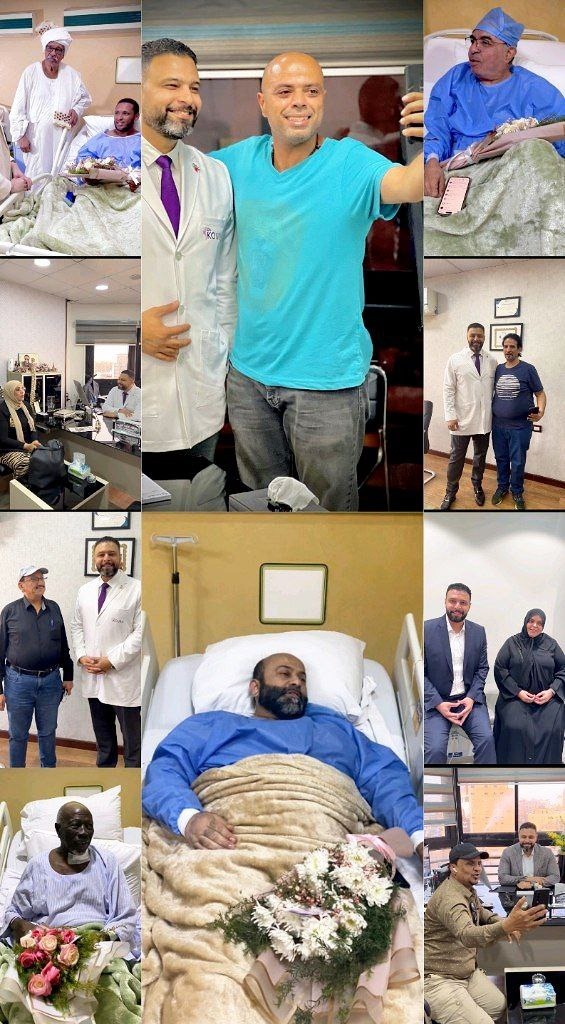
To see patients' reviews
Click hereDisc Prolapse and Herniated Disc Treatment in Dubai and Cairo
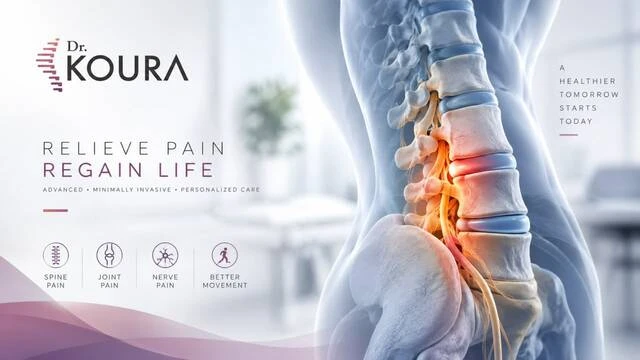
Disc Prolapse and Herniated Disc Treatment in Dubai and Cairo: From Injections and Laser to Disc-FX and Endoscopic Discectomy
When an MRI shows a disc bulge, disc prolapse, or herniated disc, one of the first questions many patients ask is:
“How large is the disc?”
But this is often not the most important question.
The more important questions are:
Is the disc actually causing the pain? Is the pain coming from the disc itself, irritation of a nerve root, mechanical nerve compression, epidural adhesions, or a disc fragment that needs to be removed?
This is why disc prolapse should not be treated with the same procedure in every patient.
At Dr Mohamed Koura's clinics in Dubai and Cairo, treatment begins by identifying the actual pain generator and then selecting the least invasive procedure capable of adequately treating that problem.
For one patient, the appropriate treatment may be medication and rehabilitation. Another may benefit from a targeted spinal injection.
Some carefully selected patients may be candidates for intradiscal laser treatment or Disc-FX. Others may require an epidural catheter, epiduroscopy, or endoscopic removal of the herniated disc.
And in certain cases, microscopic discectomy may be the most appropriate treatment rather than attempting to avoid surgery when surgery is genuinely needed.
The principle is simple:
We do not choose a procedure and then look for patients who fit it. We identify the problem first, then choose the procedure that fits the patient.
What Is a Herniated or Prolapsed Disc?
The discs between the vertebrae contain a softer inner nucleus surrounded by a stronger outer fibrous ring.
Degeneration, repetitive loading, or injury may weaken or tear this outer structure, allowing part of the disc to bulge or herniate.
However, the term “disc prolapse” can describe several very different conditions.
A patient may have a contained disc protrusion, where the disc material remains contained by the outer annulus.
Another patient may have a disc compressing a nerve root and producing sciatica.
A larger tear may allow disc material to extrude beyond the annulus, and in some cases, a fragment may become separated within the spinal canal.
In another group of patients, the main problem may be discogenic pain originating from the disc itself without major nerve compression.
These patients may appear to have a similar diagnosis on an MRI report, yet require completely different treatments.
Not Every Disc Abnormality on MRI Is the Cause of Pain
This is one of the most important concepts in modern spine and pain medicine.
An MRI showing disc degeneration or a disc bulge does not automatically mean that the disc is responsible for all of the patient's symptoms.
Lower back pain can also originate from the facet joints, sacroiliac joint, muscles, nerves, spinal stenosis, or a combination of several structures.
The MRI therefore needs to be correlated with the patient's symptoms and clinical examination.
Does the patient have back pain alone?
Does the pain travel down the leg?
Is there numbness, burning, or tingling?
Is the pain aggravated by sitting or bending?
Is there weakness?
Does the pattern of pain actually correspond to the nerve root affected on MRI?
These details determine the appropriate treatment far more than the MRI report alone.
How Is Disc Prolapse Treated in Interventional Pain Medicine?
Modern spine care does not simply jump from medication to open surgery.
Between conservative care and conventional surgery, there is now a wide spectrum of minimally invasive spine and interventional pain procedures.
Conservative Treatment and Rehabilitation
Many disc problems do not require an invasive procedure.
Treatment may begin with appropriate medication, activity modification, physiotherapy, rehabilitation, and strengthening while neurological symptoms are carefully monitored.
If pain remains severe, persistent, or significantly interferes with walking, sleeping, working, or exercising, additional treatment can be considered.
Targeted Epidural and Nerve Root Injections
When the primary problem is nerve root inflammation caused by a herniated disc, a targeted nerve root or epidural injection may be considered in selected patients.
The procedure is performed under imaging guidance to accurately reach the intended area. These injections do not physically remove the herniated disc.
Their role may be to reduce inflammation around the nerve, relieve radicular pain, and allow the body and rehabilitation process time to recover.
Other patients, however, may have a more significant mechanical problem that requires a different approach.
Intradiscal Laser Treatment for Discogenic Pain
In carefully selected cases of contained disc prolapse or discogenic pain, intradiscal laser treatment may be considered.
This is completely different from applying a laser externally to the skin.
A fine needle is guided accurately into the disc under fluoroscopic imaging, after which a laser fibre is positioned inside the disc.
In appropriate cases, laser energy can be used to reduce part of the nucleus and decrease intradiscal pressure.
Thermal treatment within the disc may also form part of the strategy for treating selected sources of discogenic pain.
Is Laser Treatment Suitable for Every Herniated Disc?
No.
This is an important distinction.
Intradiscal laser procedures are generally considered for carefully selected contained disc problems.
A large extruded or sequestered fragment within the spinal canal, or progressive neurological weakness requiring direct decompression, represents a very different clinical situation.
The fact that an MRI report says “disc prolapse” does not automatically make laser treatment appropriate.
Patient selection is a major part of the procedure's success.
Disc-FX for Contained Disc Herniation and Discogenic Pain
Disc-FX is another minimally invasive intradiscal procedure that may be used in selected patients with contained disc herniation and discogenic pain.
Through a very small access channel, the system allows treatment to be performed inside the disc using more than one mechanism.
A limited amount of nucleus material can be removed when appropriate, while radiofrequency energy can be used to treat selected areas within the disc and annulus.
Disc-FX therefore goes beyond the concept of simply “injecting the disc.”
It is a true interventional procedure designed to address selected mechanical and pain-generating components of disc disease while avoiding the tissue disruption associated with larger surgical approaches.
However, Disc-FX is not appropriate for every disc herniation.
If a large fragment has already extruded and is significantly compressing the nerve, treating only the inside of the disc may not address the actual problem.
Other Intradiscal Procedures
Other techniques may also be considered in selected situations, including:
Percutaneous disc decompression, nucleoplasty, intradiscal radiofrequency treatment, and annuloplasty.
The appropriate technique depends on the anatomy of the disc, the patient's symptoms, degeneration, nerve involvement, age, activity level, and previous treatment.
The goal is not to use the largest number of available technologies.
The goal is to use the technology whose mechanism actually matches the patient's pain generator.
Epiduroscopy: Direct Visualization Inside the Epidural Space
For some patients, the problem is not simply the size of the disc.
Chronic inflammation, fibrosis, or adhesions may develop around the nerves within the epidural space, particularly after previous spine surgery or prolonged nerve root irritation.
In selected cases, epiduroscopy can be an important option.
Epiduroscopy uses a very small endoscope to enter the epidural space and directly visualize areas within the spinal canal rather than relying solely on external imaging.
In appropriate patients, it can allow targeted treatment of certain adhesions and help access areas associated with persistent radicular symptoms.
Epiduroscopy is one of the more technically advanced procedures within interventional pain medicine and requires detailed anatomical understanding, advanced training, and procedural experience.
It is also one of Dr Mohamed Koura's principal areas of advanced minimally invasive spine practice.
Epidural Adhesiolysis, Targeted Catheters, and Balloon Neuroplasty
Not every patient needs full epiduroscopy.
In some cases, specialized epidural catheters can be navigated toward the affected nerve root to help address adhesions or deliver treatment more precisely.
In carefully selected cases, balloon neuroplasty may also be considered when stenosis or adhesions around nerve roots contribute to symptoms.
These procedures occupy an important space between conventional spinal injections and more invasive endoscopic or surgical procedures.
When Is Endoscopic Discectomy Needed?
If a herniated disc fragment is producing significant mechanical pressure on a nerve, physically removing the offending fragment may be more appropriate than repeatedly injecting the nerve or attempting to decompress the disc only from within.
This is where endoscopic discectomy may be considered.
Endoscopic discectomy is not simply an injection or pain procedure.
It is a minimally invasive form of spine surgery performed through a small working channel using a dedicated spinal endoscope.
The surgeon can directly visualize tissues and remove the disc material responsible for nerve compression while minimizing the size of the surgical access compared with some traditional approaches.
Choosing the appropriate endoscopic route and safely reaching the pathology requires specialized training and a significant learning curve.
These techniques, therefore, are not offered with the same level of expertise in every centre treating spinal pain.
When Is Microscopic Discectomy the Better Option?
Having access to multiple minimally invasive options also means recognising when a nonsurgical procedure is not the best choice.
Some patients are better treated with a microscopic discectomy.
At Dr Mohamed Koura's centre in Cairo, patients who require microscopic discectomy can undergo surgery in collaboration with a highly experienced neurosurgeon, allowing treatment to move appropriately from interventional pain procedures to surgery when surgery provides the best solution.
The aim is not to avoid surgery at all costs.
The aim is to avoid unnecessary surgery without delaying necessary surgery.
When Should Surgical Assessment Not Be Delayed?
Progressive muscle weakness, new foot drop, severe bladder or bowel dysfunction, or numbness in the saddle region require urgent medical assessment.
These findings may indicate significant neurological compression.
The availability of laser treatment, Disc-FX, or other minimally invasive technologies should never lead to inappropriate delay when a nerve needs urgent decompression.
What Is the Difference Between Laser, Disc-FX, Epiduroscopy, and Endoscopic Discectomy?
The main difference is where each procedure works.
Laser treatment and Disc-FX primarily work inside the intervertebral disc in selected cases.
Epidural catheters and epiduroscopy work primarily within the epidural space around the spinal nerves, particularly when inflammation, fibrosis, or adhesions are part of the problem.
Endoscopic discectomy, by contrast, allows the physician to physically remove disc material when a herniated fragment is producing mechanical nerve compression.
Microscopic discectomy remains an important option when that is the most appropriate surgical treatment.
The right question, therefore, is not:
“Which procedure is the best?”
It is:
“Which procedure best matches the anatomy and source of my symptoms?”
What Makes Dr Mohamed Koura's Approach Different?
Managing complex spine pain is not simply about owning a particular device.
Advanced procedures such as epiduroscopy, specialized epidural catheter techniques, intradiscal procedures, and spinal endoscopic techniques require structured training, extensive procedural experience, and a substantial learning curve.
Dr Mohamed Koura is a Consultant in Pain Medicine in Egypt and Specialist in Pain Medicine in Dubai, with more than 15 years of experience in interventional pain medicine and minimally invasive spine procedures.
He holds the FIPP and EDPM qualifications and has undergone advanced European training in minimally invasive and endoscopic lumbar spine techniques, including training in Salzburg and Munich.
Epiduroscopy and advanced minimally invasive spinal interventions represent an important part of his clinical focus.
The difference, however, is not simply the number of procedures available.
It is the ability to move appropriately from a simple intervention to an advanced procedure or minimally invasive surgery depending on what the individual patient actually needs.
Treating Patients From Dubai, Cairo, and Around the World
Dr Mohamed Koura sees patients in Dubai and Cairo, as well as patients travelling from other countries for assessment of complex spinal pain, persistent disc symptoms, or pain that has continued despite previous treatments.
Some patients seek consultation specifically because they require evaluation for advanced procedures that are not routinely performed by every pain specialist or spine centre, particularly techniques that require a long learning curve and specialised training, such as epiduroscopy, advanced epidural catheter techniques, Disc-FX, and selected endoscopic spine procedures.
For patients travelling from abroad, bringing the actual MRI images, previous medical reports, and details of prior injections or operations can make the initial assessment considerably more useful.
Can a Herniated Disc Be Treated Without Surgery?
In many patients, yes.
But the answer depends on the type of disc herniation, degree of nerve compression, duration of symptoms, severity of pain, and presence or absence of neurological weakness.
The appropriate treatment may range from medication and rehabilitation to a targeted injection, intradiscal procedure, catheter treatment, epiduroscopy, or endoscopic intervention.
Other patients may genuinely need removal of the herniated disc.
Is Laser Better Than Surgery for a Herniated Disc?
There is no universal answer.
Laser treatment is intended for selected disc conditions, particularly certain contained disc abnormalities.
A large extruded fragment or significant nerve compression may require direct decompression instead.
Performing laser treatment on a patient who actually needs surgical decompression is not advanced medicine.
Likewise, performing a larger operation on a patient who can be treated effectively with a smaller intervention may represent unnecessary treatment.
What Is the Difference Between Disc-FX and Laser Disc Treatment?
Both are intradiscal procedures, but they use different technologies.
Laser treatment delivers laser energy within the disc.
Disc-FX uses a system that can combine limited removal of nucleus material with radiofrequency treatment of selected areas of the disc and annulus.
The decision between them should be based on the patient's anatomy and pain mechanism, not simply on which technology sounds newer.
What Is the Difference Between Epiduroscopy and Endoscopic Discectomy?
Although both involve an endoscope, they are fundamentally different procedures.
Epiduroscopy involves navigating the epidural space around spinal nerves and is used in selected interventional pain conditions, including certain adhesions and persistent radicular pain.
Endoscopic discectomy is minimally invasive spine surgery in which the herniated disc fragment causing nerve compression is directly removed.
Can Sciatica Be Treated Without Surgery?
Frequently, yes.
Sciatica describes nerve pain rather than a single disease.
If symptoms are primarily caused by nerve inflammation with limited mechanical compression, nonsurgical treatment may be effective.
However, severe persistent compression, progressive weakness, or a disc fragment that requires removal may make endoscopic or microscopic discectomy more appropriate.
How Do I Know Which Treatment Is Right for My Disc?
This decision usually cannot be made from an MRI report alone.
The actual MRI images should be reviewed alongside the patient's symptoms, neurological examination, duration of pain, and previous treatment.
The ultimate objective is to identify the least invasive treatment capable of properly addressing the actual pain generator, while escalating to a more invasive procedure only when the clinical situation requires it.
Herniated Disc Treatment in Dubai and Cairo
If you are suffering from lower back pain, disc prolapse, herniated disc, sciatica, pain travelling down the leg, or persistent symptoms after previous injections or spine surgery, the first step is not choosing between laser, injections, or an endoscope.
The first step is identifying what is actually causing the pain.
Treatment options can then be selected appropriately and may include conservative care, targeted spinal injections, intradiscal treatment, laser disc decompression, Disc-FX, specialised epidural catheters, balloon neuroplasty, epiduroscopy, endoscopic discectomy, or microscopic discectomy when required.
The goal is not simply to avoid surgery.
The goal is to choose the right treatment for the right problem, using the least invasive effective approach.
Why Choose Dr. Mohamed Koura ?
Simply because he is the best doctor in his feild. He stays updated on the latest treatment technologies through his participation in various international conferences with leading foreign doctors and experts. Finally, and most importantly, Dr. Mohamed Koura is the best doctor in Egypt and the Arab world, possessing 12 non-surgical techniques for treating spinal and joint problems. He was the first to introduce modern interventional treatment techniques in Egypt & the Middle East and is the only one using the disc fx technique to treat spinal pain.
No, it is necessary to make a reservation through a phone call or social media messages.
Lower back pain can result from several causes, including a herniated disc, nerve compression, muscle strain, or chronic spinal injuries. Lifestyle factors such as prolonged sitting, muscle weakness, and excess weight can also exacerbate the problem.
Yes, most cases can be successfully managed with non-surgical treatment for lower back pain. Options such as medication, nerve root injection, disc injection, and radiofrequency therapy are highly effective in relieving pain and improving mobility without the need for surgery.
The best treatment for back pain depends on the cause and severity of the condition. Typically, it starts with medication for back pain, followed by minimally invasive procedures like nerve root injections or radiofrequency therapy to target the source of pain effectively.
Yes, radiofrequency therapy is considered a safe and effective option for chronic lower back pain. It works by interrupting pain signals from the affected nerves and provides long-lasting relief, especially in cases of herniated disc and spinal pain.
A life without pain without surgery
Once you book with Dr. Koura
Get rid of pain with just one call… Book your appointment now with Dr. Mohamed Koura, the best pain management doctor and a specialized consultant in spine treatment.
The highest success rates thanks to years of experience and scientific development
Using the latest non-surgical technologies available in Egypt and the Middle East
The largest team specialized in treating spine and joint pain without surgery
































Services
Our Branches
- Egypt - El Mohandssen
- +201210577770
- 54, intersection of Al-Batal Ahmed Abdel Aziz Street with the League of Arab States, above Qatar National Bank - Mohandiseen - Giza
- Dubai
- +971501232065
- Dubai Healthcare City Phase 2 - Al Jaddaf - Dubai - United Arab Emirates
- Al Sheikh Zayed
- 00201067303035
- ، First Al Sheikh Zayed, Giza Governorate