
 العربية
 English

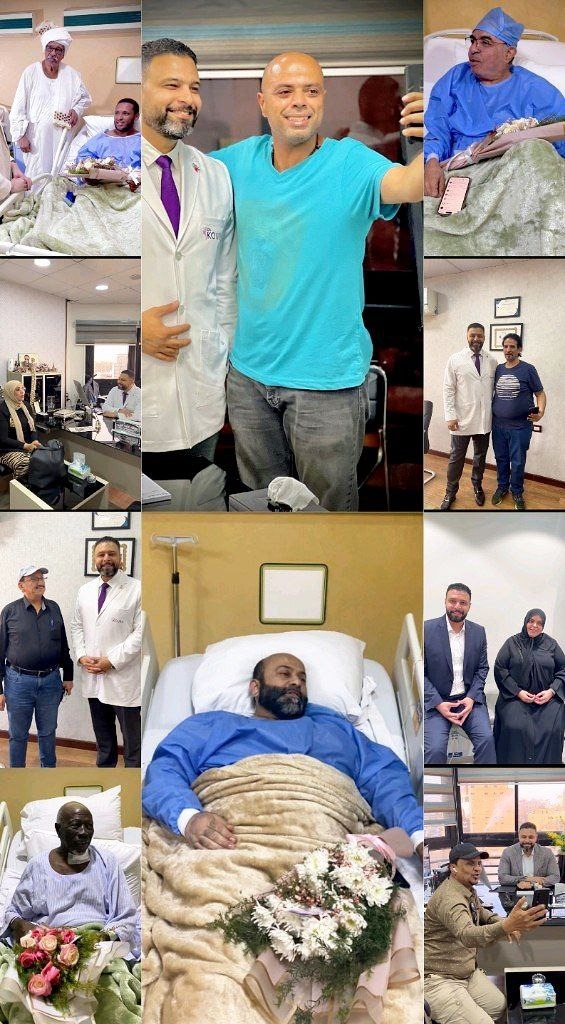
To see patients' reviews
Click hereHand Numbness at Night: Is It Your Wrist or Your Neck?

This is an illustrative scenario, not a real patient story or testimonial.
Imagine waking at two in the morning with tingling fingers. You shake your hand, change position and eventually fall asleep. A few nights later, it happens again. During the day, holding your phone becomes uncomfortable, and you begin wondering whether the problem is your pillow, your work or a slipped disc.
Someone recommends a wrist injection. Someone else suggests a neck MRI. You are left choosing between treatments before anyone has explained what needs treating.
For patients seeking assessment for hand numbness in Greater Cairo or Dubai, the useful starting point is the pattern of symptoms. A consultation should connect that pattern with an examination, then decide whether testing or treatment would change what happens next.
Why the fingers provide useful clues
Carpal tunnel syndrome develops when the median nerve is compressed as it passes through a narrow space at the wrist. Tingling commonly affects the thumb, index and middle fingers, and part of the ring finger. The little finger is usually spared. Symptoms may wake you at night, but finger distribution alone cannot confirm the diagnosis. [6]
For our illustrative patient, “my whole hand feels strange” is a reasonable first description. Before the appointment, she could note which fingers are affected, whether symptoms occur in one or both hands, and whether they settle completely. These observations give the clinician something more useful than a treatment name found online.
When the neck may be involved
An irritated nerve root in the neck can cause pain travelling into the arm, with tingling, altered sensation or weakness. Neck movement may change the symptoms. Similar complaints can also arise from nerves compressed elsewhere, including near the elbow. Examination helps distinguish these possibilities; a neck scan finding does not automatically explain a numb hand. [2]
If you already have a report mentioning cervical disc changes, bring the images as well as the report. Our separate guide to cervical disc problems discusses that pathway. Here, the question comes first: does the suspected source fit what you actually experience?
What assessment can clarify
Expect a discussion about onset, sleep disruption, hand function and previous treatment. Mention diabetes, pregnancy, previous wrist injury and other relevant medical conditions. The clinician may examine the hand and wrist, assess strength and sensation, and examine the neck and arm when appropriate. [1], [3]
Explain what “weakness” means to you. Is a mug slipping because your fingers feel numb, because gripping hurts, or because you cannot generate your usual strength? You do not need to work this out yourself. Describing the situation helps the examination answer a practical question rather than simply attach a label.
Bring a medication list and any previous test results. Write down your priority too: sleeping through the night, fastening buttons or managing a particular task comfortably. This creates a clear goal against which the next step can be reviewed.
Does everyone need nerve testing or MRI?
No. In a typical carpal tunnel presentation, a structured history and examination may be enough. The 2024 American Academy of Orthopaedic Surgeons guideline supports clinical assessment without routine ultrasound or nerve conduction testing in every patient. MRI is not a routine diagnostic test for carpal tunnel syndrome. [4]
Nerve conduction studies, sometimes with electromyography, can be useful when the diagnosis is uncertain or the clinician needs information about nerve function and severity. They may help distinguish a wrist problem from another nerve disorder. Ultrasound is useful in selected circumstances. [1], [11]
Ask: “What question would this test answer, and how would the result change my care?” That is more useful than requesting every available investigation.
If it is carpal tunnel, what usually comes first?
For suitable patients with mild or intermittent symptoms, initial care may include a night splint that keeps the wrist neutral and changes to activities that repeatedly bend the wrist or require forceful gripping. Improvement may take several weeks. Painkillers may ease discomfort but do not resolve the underlying compression. [3]
Agree a review point rather than continuing indefinitely without checking progress. For our illustrative patient, a simple record of night waking and troublesome tasks would help that discussion. New weakness or worsening sensation should prompt earlier reassessment, even if the original plan was to review later.
Where an injection fits—and its limits
A local corticosteroid injection may be considered for selected patients with confirmed carpal tunnel symptoms, for example when a splint has not helped sufficiently. It can reduce symptoms temporarily. However, the AAOS guideline finds that corticosteroid injections do not provide long-term improvement in carpal tunnel syndrome. Relief is not proof that the underlying problem has permanently resolved. [3], [4]
Before proceeding, discuss possible pain flare, skin colour change or thinning of tissue around the injection, infection and rare nerve injury. Blood glucose can rise, particularly in people with diabetes. Share your medicines, allergies and relevant health conditions so risks can be assessed individually. [5]
The decision should include what to do if symptoms return. Repeating a treatment without reviewing the diagnosis, function and alternatives is not a complete plan.
When a different pathway matters
Persistent symptoms despite appropriate care, constant numbness, thumb muscle wasting or evidence of significant nerve damage may lead to discussion with a hand surgeon. Carpal tunnel release aims to reduce pressure on the nerve. Recovery varies, and longstanding nerve damage may limit improvement. [1]
Surgery also has risks, including infection, bleeding, scar tenderness, persistent pain and nerve injury. A surgical opinion is an opportunity to understand those trade-offs, not a commitment to an operation. [6]
Seek prompt assessment for progressive hand weakness. New hand clumsiness together with walking or balance difficulties, or new bladder or bowel changes, needs immediate emergency assessment for possible spinal cord involvement. Sudden arm numbness or weakness, especially with facial drooping or speech difficulty, requires emergency care immediately. [7], [8]
A consultation with Dr. Mohamed Koura
Dr. Mohamed Koura is a Consultant in Pain Medicine in Egypt and a Specialist in Pain Medicine in Dubai. His published qualifications include Fellow of Interventional Pain Practice (FIPP) and the European Diploma in Pain Medicine (EDPM). His practice offers assessment in Mohandessin and Sheikh Zayed in Greater Cairo, Egypt, and in Dubai, UAE. [9], [10]
For this symptom, the consultation can clarify the likely source, whether further investigation is useful, and whether conservative care, an intervention or referral is appropriate. These qualifications describe his professional background; they do not guarantee a particular outcome.
If hand numbness keeps interrupting your sleep or daily activities, request an appointment with Dr. Koura. Choose Mohandessin, Sheikh Zayed or Dubai, and bring previous reports and your medication list. Start with an assessment of the cause, then discuss the next step that fits your findings and priorities. [10]
Why Choose Dr. Mohamed Koura ?
Simply because he is the best doctor in his feild. He stays updated on the latest treatment technologies through his participation in various international conferences with leading foreign doctors and experts. Finally, and most importantly, Dr. Mohamed Koura is the best doctor in Egypt and the Arab world, possessing 12 non-surgical techniques for treating spinal and joint problems. He was the first to introduce modern interventional treatment techniques in Egypt & the Middle East and is the only one using the disc fx technique to treat spinal pain.
Certainly not, some cases must be treated surgically, and the most appropriate technique for the patient is determined through a medical examination and the presence of imaging studies.
Excessive sweating in the hands and feet occurs due to overactivity of the sweat glands or genetic factors, and it may also be related to psychological stress or certain medical conditions.
It is usually not dangerous to health, but it can affect daily comfort and self-confidence.
Treatment includes antiperspirant creams, Botox injections to reduce sweat production, or radiofrequency therapy, which is used to heat the nerves responsible for stimulating the sweat glands, thereby reducing sweating almost permanently.
Cartilage wear due to aging, obesity, previous injuries, or chronic arthritis.
Treatment includes physical therapy, exercises to strengthen the muscles around the joint, hyaluronic acid injections, or platelet-rich plasma (PRP) injections to improve joint movement and reduce pain.
It includes antiviral medications to reduce the severity of the infection, pain relievers, and also radiofrequency therapy, which is considered the best way to relieve the pain of shingles.
In some cases, it may cause persistent pain after the rash disappears (postherpetic neuralgia), which requires additional treatment to relieve the pain.
Yes, treatment includes interventional injections to reduce pain and inflammation, radiofrequency therapy, physical therapy, and muscle-strengthening exercises to support the spine and improve mobility.
A life without pain without surgery
Once you book with Dr. Koura
Get rid of pain with just one call… Book your appointment now with Dr. Mohamed Koura, the best pain management doctor and a specialized consultant in spine treatment.
The highest success rates thanks to years of experience and scientific development
Using the latest non-surgical technologies available in Egypt and the Middle East
The largest team specialized in treating spine and joint pain without surgery

































Services
Our Branches
- Egypt - El Mohandssen
- +201210577770
- 54, intersection of Al-Batal Ahmed Abdel Aziz Street with the League of Arab States, above Qatar National Bank - Mohandiseen - Giza
- Dubai
- +971501232065
- Dubai Healthcare City Phase 2 - Al Jaddaf - Dubai - United Arab Emirates
- Al Sheikh Zayed
- 00201067303035
- ، First Al Sheikh Zayed, Giza Governorate