
 العربية
 English

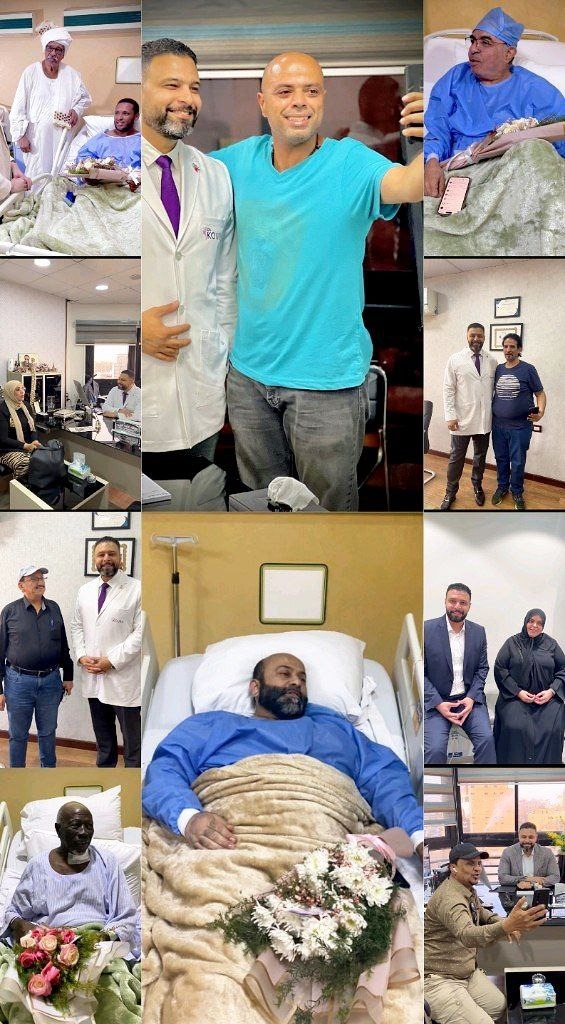
To see patients' reviews
Click hereSacroiliac Joint Injections: When Might They Help Pain Behind the Pelvis?

The following scenario is illustrative. It is not a real patient story or a testimonial.
Imagine a man who has started planning his day around a painful spot near the back of his pelvis. Getting out of the car is uncomfortable. He hesitates before standing after a meeting. When someone asks where it hurts, he points just to one side of his lower back and says, “Perhaps it is another disc problem.”
He has already tried treatment, but he cannot explain what the proposed next injection is meant to achieve. Is it a test? Is it treatment? Will it repair something? Before booking a procedure, those questions deserve clear answers.
For someone seeking help in Greater Cairo or Dubai, a useful consultation begins by identifying the likely source of pain and discussing realistic options. A sacroiliac joint injection may enter that discussion in selected cases, but it is not a routine answer to every backache.
First, locate the problem—not just the painful spot
The sacroiliac joints connect the sacrum, at the base of the spine, to the pelvic bones. There is one on each side. Pain may arise from the joint or surrounding structures, and symptoms can overlap with other lower-back and hip problems. Pointing to a painful area is helpful, but it does not establish the diagnosis. [1,2]
In our illustrative scenario, the next step is a conversation and examination, not a decision based on location alone. The clinician considers the back, hips and neurological findings, alongside movements that reproduce the familiar pain. Several examination findings may inform the assessment; no single manoeuvre provides certainty. Imaging may help investigate other causes or inflammatory disease, but does not reliably identify every painful sacroiliac joint. [2]
Bring any existing scan images and reports. Our guide to different causes of back pain provides background; the purpose of your appointment is to work out which possibilities actually fit you.
Some symptoms change the direction of assessment
Tell the doctor if stiffness is particularly troublesome in the morning, pain wakes you at night, and movement helps more than rest. Mention psoriasis, inflammatory bowel disease or previous inflammation in the eye. This pattern can raise concern about inflammatory spinal disease and may require rheumatology assessment rather than a procedure-led plan. [3]
The patient in our example should also describe anything that has changed since earlier appointments. A new symptom should not be left out because a scan was already performed. If pain travels down the leg, explain its course and whether there is numbness or weakness; the sciatica injection pathway is a different discussion.
When might an injection be considered?
A 2026 multisociety recommendation supports considering sacroiliac corticosteroid injections in selected patients whose history and examination fit this source, whose pain has lasted at least three months, and whose relief from more conservative treatment has been inadequate. This describes a possible selection pathway, not an instruction that everyone meeting those conditions should have an injection. [4]
Before that decision, review what has actually been tried: an appropriate exercise or physiotherapy programme, activity adjustments and medication where suitable. Explain whether the treatment was tolerable and what it changed. “Physiotherapy did not work” is less informative than describing the exercises, the duration and the tasks that remain difficult.
A practical goal might be standing up comfortably after a meeting or walking a chosen distance. Agreeing that goal helps you judge whether any improvement matters in daily life.
Why the evidence needs an honest discussion
Recommendations differ. The 2026 specialist consensus describes possible short- to intermediate-term benefit, generally one to three months, in selected patients. By contrast, a 2025 BMJ guideline strongly recommends against joint-targeted injections for chronic axial spine pain, including sacroiliac injections, based on its assessment of benefits, harms and burdens. That guideline excludes inflammatory arthropathy from its scope. [4,5]
This disagreement means an injection should not be presented as proven lasting treatment or the inevitable next step. Ask how the evidence applies to your diagnosis, what benefit is realistic, and what continuing non-procedural care would involve. Choosing to defer an injection is a legitimate outcome of that discussion.
What does the injection do?
The injection may contain local anaesthetic and corticosteroid. The anaesthetic can temporarily reduce pain; the steroid is intended to reduce inflammation. The clinician should explain whether the main aim is diagnostic information, symptom relief, or both. An early response is useful information, but does not by itself prove that one structure explains all your pain. [1,2]
For an injection intended to reach inside the joint, imaging guidance helps position the needle; fluoroscopy or CT is recommended to confirm intra-articular delivery. Guidance improves targeting, but cannot guarantee that the treatment will help. [4]
The procedure does not rebuild the joint or guarantee a cure. If temporary relief occurs, discuss how to use that period within a wider rehabilitation plan. [1]
Preparation and risks worth discussing
Tell the team about infection, pregnancy, allergies, diabetes and all medicines, including blood thinners. Do not stop prescribed medication yourself: obtain individual instructions. Arrange transport and clarify the clinic's advice about eating, driving, work and follow-up before the day of treatment. [6]
Possible complications include local soreness or bruising, infection, allergic reactions and temporary leg numbness or weakness. Steroid may temporarily raise blood glucose. Serious nerve injury is rare but possible. Risks and their relevance depend on your health and the planned procedure; “a small injection” does not mean “no risk.” [1,6,7]
Ask who to contact afterwards. Increasing redness or warmth at the injection site, fever or feeling unwell needs medical advice. New or persistent weakness needs urgent assessment rather than being assumed to be a normal injection effect. [6]
What happens after the appointment?
Follow the discharge instructions and do not drive yourself home. Return to activity as advised rather than testing the result with strenuous exercise. [7] Record what changed, how long it lasted and whether your agreed daily-life goal became easier. Record no improvement just as carefully as improvement.
At review, ask what the result changes. If benefit is absent or brief, the appropriate response may be to reassess the diagnosis or the overall treatment plan. There is no automatic commitment to repeated injections, radiofrequency or surgery. Each later option needs its own indication and discussion.
Making the next decision with Dr. Mohamed Koura
Dr. Mohamed Koura is a Consultant in Pain Medicine in Egypt and a Specialist in Pain Medicine in Dubai, with published qualifications including FIPP and EDPM. His practice offers consultations in Mohandessin and Sheikh Zayed in Greater Cairo, Egypt, and Dubai, UAE. These credentials describe his training and professional background; they do not promise a particular result. [8]
Bring your reports, medication list and a short account of previous treatment. Use the consultation to clarify the likely pain source, whether additional tests or referral are needed, and how the benefits and limitations of each option compare for you.
If pain around the back of your pelvis keeps disrupting daily life, request an assessment with Dr. Koura. Select Mohandessin, Sheikh Zayed or Dubai and ask to discuss the cause of your pain and an individual plan before deciding on an injection. [9]
References / المراجع
1. Guy's and St Thomas' NHS: Sacroiliac joint injections
2. International multispecialty consensus, RAPM 2025: SI joint complex pain
3. NHS: Ankylosing spondylitis symptoms
4. Multisociety recommendations, RAPM 2026: Corticosteroid injections for facet and sacroiliac joint pain
5. BMJ 2025;388:e079970: Interventional procedures for non-cancer chronic spine pain
6. Royal United Hospitals Bath NHS: Sacroiliac joint injection leaflet
7. Royal Orthopaedic Hospital NHS: Sacroiliac joint injection
8. Practice qualifications and published country-specific titles.
Why Choose Dr. Mohamed Koura ?
Simply because he is the best doctor in his feild. He stays updated on the latest treatment technologies through his participation in various international conferences with leading foreign doctors and experts. Finally, and most importantly, Dr. Mohamed Koura is the best doctor in Egypt and the Arab world, possessing 12 non-surgical techniques for treating spinal and joint problems. He was the first to introduce modern interventional treatment techniques in Egypt & the Middle East and is the only one using the disc fx technique to treat spinal pain.
No, it is necessary to make a reservation through a phone call or social media messages.
Lower back pain can result from several causes, including a herniated disc, nerve compression, muscle strain, or chronic spinal injuries. Lifestyle factors such as prolonged sitting, muscle weakness, and excess weight can also exacerbate the problem.
Yes, most cases can be successfully managed with non-surgical treatment for lower back pain. Options such as medication, nerve root injection, disc injection, and radiofrequency therapy are highly effective in relieving pain and improving mobility without the need for surgery.
The best treatment for back pain depends on the cause and severity of the condition. Typically, it starts with medication for back pain, followed by minimally invasive procedures like nerve root injections or radiofrequency therapy to target the source of pain effectively.
Yes, radiofrequency therapy is considered a safe and effective option for chronic lower back pain. It works by interrupting pain signals from the affected nerves and provides long-lasting relief, especially in cases of herniated disc and spinal pain.
A life without pain without surgery
Once you book with Dr. Koura
Get rid of pain with just one call… Book your appointment now with Dr. Mohamed Koura, the best pain management doctor and a specialized consultant in spine treatment.
The highest success rates thanks to years of experience and scientific development
Using the latest non-surgical technologies available in Egypt and the Middle East
The largest team specialized in treating spine and joint pain without surgery

































Services
Our Branches
- Egypt - El Mohandssen
- +201210577770
- 54, intersection of Al-Batal Ahmed Abdel Aziz Street with the League of Arab States, above Qatar National Bank - Mohandiseen - Giza
- Dubai
- +971501232065
- Dubai Healthcare City Phase 2 - Al Jaddaf - Dubai - United Arab Emirates
- Al Sheikh Zayed
- 00201067303035
- ، First Al Sheikh Zayed, Giza Governorate